
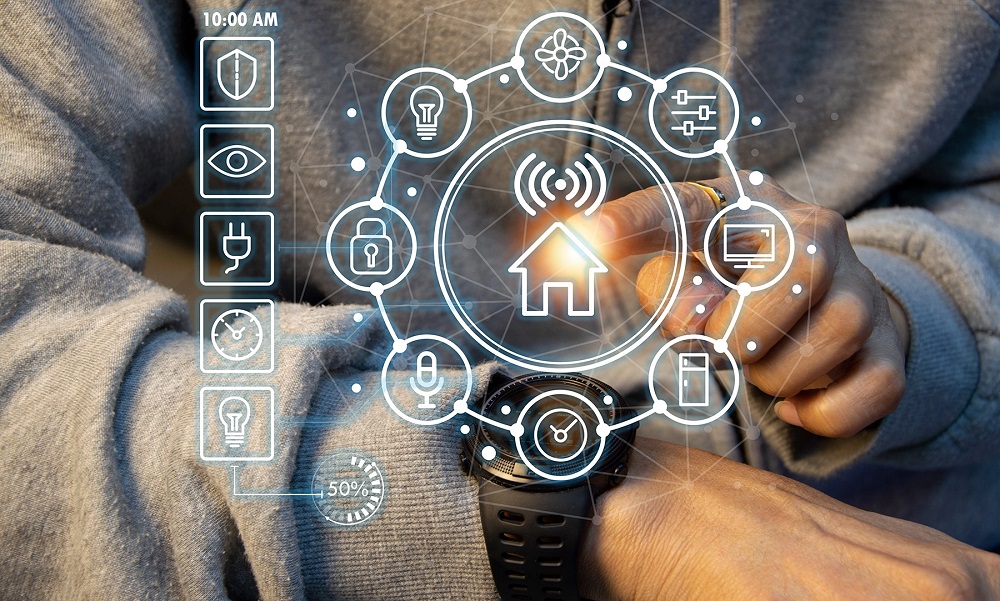
The relationship between humans and consumer technology is undergoing a structural rewiring. For decades, interacting with a computer, smartphone, or smart appliance required deliberate input: a keystroke, a screen swipe, or a voice command. However, the next era of consumer technology is shifting from reactive tools to proactive, invisible infrastructure.
Driven by advancements in artificial intelligence, edge computing, and unified communication protocols, the future of smart devices belongs to ambient intelligence—a paradigm where technology fades completely into the background, anticipating human needs without demanding conscious attention.
The Rise of Ambient Computing and Invisible Interfaces
The most significant evolution in consumer technology is the decline of screen-centric dependency. While smartphones and tablets will remain central hubs for complex data, daily interactions with the physical environment are transitioning to ambient computing.
In an ambient environment, the home or workplace itself functions as the computer. This is made possible by an expansive network of ultra-low-power, specialized sensors embedded in walls, furniture, and everyday fixtures. Rather than relying on a user to manually open an app or speak to a virtual assistant, these sensors monitor environmental variables such as presence, posture, biometric indicators, and lighting conditions.
Hardware engineers are achieving this through innovative energy harvesting techniques. Future smart sensors will not require frequent battery replacements or dedicated wiring; instead, they will draw microscopic amounts of power from ambient light, thermal gradients, and background radio frequency waves. As a result, consumer hardware will become entirely unobtrusive, fundamentally reducing the cognitive overload and digital fatigue associated with the modern smart home.
Next-Generation Interoperability via Open Standards
Historically, the consumer tech ecosystem was deeply fragmented. Buyers were forced to choose a specific ecosystem, leading to situations where smart lights from one brand could not communicate with a security camera or thermostat from another. This friction severely restricted the potential of home automation.
The mass adoption of unified open standards, such as Matter, has effectively neutralized this problem. Interoperability is now a default baseline rather than a luxury upgrade. With cross-brand communication secured at the local network level, consumer devices can seamlessly share raw sensor data.
-
Contextual Automation: An open framework allows an atmospheric sensor to cross-reference data with smart window blinds and a localized HVAC system, adjusting indoor airflow and shading dynamically based on real-time sunlight intensity and room occupancy.
-
True Local Processing: By utilizing localized mesh networks, devices no longer need to route every single transaction through external corporate servers. This shift drastically lowers latency, preserves functionality during internet outages, and provides a robust barrier for personal privacy.
Generative AI and Autonomous Device Agents
The integration of advanced generative AI models into consumer hardware marks the end of rigid, rule-based programming. Traditional smart devices require users to manually configure specific routines, such as setting a precise time for lights to turn off or a thermostat to lower. The future relies on autonomous device agents capable of dynamic reasoning and contextual understanding.
Instead of processing simple voice commands using exact phrase matching, next-generation smart devices utilize localized language models to comprehend nuanced human intent. An individual can speak naturally to their environment, uttering a phrase as vague as “I feel tired and have a headache,” and the home infrastructure will interpret the underlying need. In response, the system may soften ambient lighting, adjust the room temperature to a clinically proven recovery zone, and activate a white noise machine.
Furthermore, these autonomous agents operate continuously in the background. By analyzing historical usage patterns, calendar schedules, and health metrics, the devices execute proactive micro-adjustments. For instance, a smart refrigerator will not simply alert a user that the milk is expired; its internal agent will autonomously cross-reference dietary preferences, verify household consumption rates, and queue an automated replenishment order via integrated e-commerce delivery networks.
Wearable Health Technology and Biometric Ecosystems
Wearable consumer tech is transitioning away from passive activity tracking toward continuous, medical-grade diagnostic monitoring. Early iterations of smartwatches and fitness bands focused primarily on superficial metrics like step counts and estimated calorie burn. The future of wearables lies in non-invasive, deep-biometric tracking.
Sophisticated optical, chemical, and electrical sensors are being integrated into diverse form factors, including smart rings, continuous glucose monitoring patches, and augmented reality eyewear. These devices track volatile biomarkers such as continuous blood pressure, blood glucose levels, blood oxygenation, hydration metrics, and real-time stress indicators via galvanic skin response.
The true transformation, however, is the integration of these wearables into the broader smart environment. Biometric data does not remain isolated within a smartphone fitness app. If a wearable ring detects a spike in cortisol levels or an elevated resting heart rate during a remote work session, it can signal the office environment to lower ambient sound, adjust ergonomic desk positioning, or modify ventilation parameters to introduce more filtered oxygen. This creates a feedback loop focused entirely on preventative health and biological optimization.
Challenges in Data Security and Privacy
As consumer technology becomes more pervasive and deeply integrated into daily routines, it introduces significant vectors for privacy exploitation and data vulnerability. An environment that monitors user presence, biometrics, and behavioral habits generates an incredibly detailed digital footprint.
To maintain consumer trust, hardware developers are heavily prioritizing edge AI processing. By performing heavy algorithmic computation directly on the local physical device rather than transmitting raw audio, video, or biometric streams to cloud-based servers, the risk of data interception is minimized.
Additionally, the implementation of zero-knowledge architecture ensures that even if device telemetry data is backed up to a cloud server, it remains completely encrypted with user-controlled keys. Technology manufacturers cannot access, analyze, or monetize this information for advertising purposes, ensuring that the convenience of an intelligent home does not require the absolute forfeiture of personal privacy.
Frequently Asked Questions
What is the primary operational difference between traditional smart devices and ambient computing?
Traditional smart devices are reactive and require direct human intervention through physical interfaces, apps, or explicit voice commands to execute a task. Ambient computing is proactive and predictive; it relies on an interconnected network of background sensors, machine learning, and contextual data to anticipate user needs and execute automations seamlessly without requiring active human prompt or awareness.
How do edge computing architectures protect user privacy in modern smart homes?
Edge computing processes data locally on the physical device or local home hub rather than transmitting sensitive information to centralized cloud servers. By keeping voice recordings, biometric metrics, and motion patterns within the local network perimeter, the data is shielded from cloud-side data breaches, corporate monetization, and unauthorized third-party access.
Will old smart home devices work with newer ambient intelligence networks?
Legacy devices can often be integrated into modern ambient networks provided they receive software updates that make them compatible with open communication standards like Matter. However, devices that lack the hardware capability for local processing or lack modern encryption protocols may require an intermediate hardware bridge to translate commands, or they may operate strictly as legacy components with limited automated intelligence.
What role does energy harvesting play in the future of consumer tech hardware?
Energy harvesting allows miniature, low-power smart sensors to operate indefinitely without relying on traditional batteries or plug-in power sources. By capturing trace amounts of energy from the surrounding environment—such as indoor light, kinetic movement, and ambient radio frequencies—hardware manufacturers can produce incredibly thin, maintenance-free sensors that can be placed anywhere.
How do autonomous device agents differ from standard virtual voice assistants?
Standard virtual voice assistants function on strict, rule-based command frameworks; they require specific phrasing to trigger singular actions. Autonomous device agents utilize localized language models and reasoning capabilities, allowing them to comprehend ambiguous language, evaluate multi-step contextual situations, and take independent action over time without requiring step-by-step guidance.
Can ambient smart homes function reliably during a total internet outage?
Yes, modern smart home architectures that prioritize local mesh networks and open communication protocols handle all critical automations entirely offline. Features like motion-activated lighting, climate control adjustments, and local security triggers remain fully operational because the devices communicate directly with one another and local hubs rather than relying on an active external internet connection.